


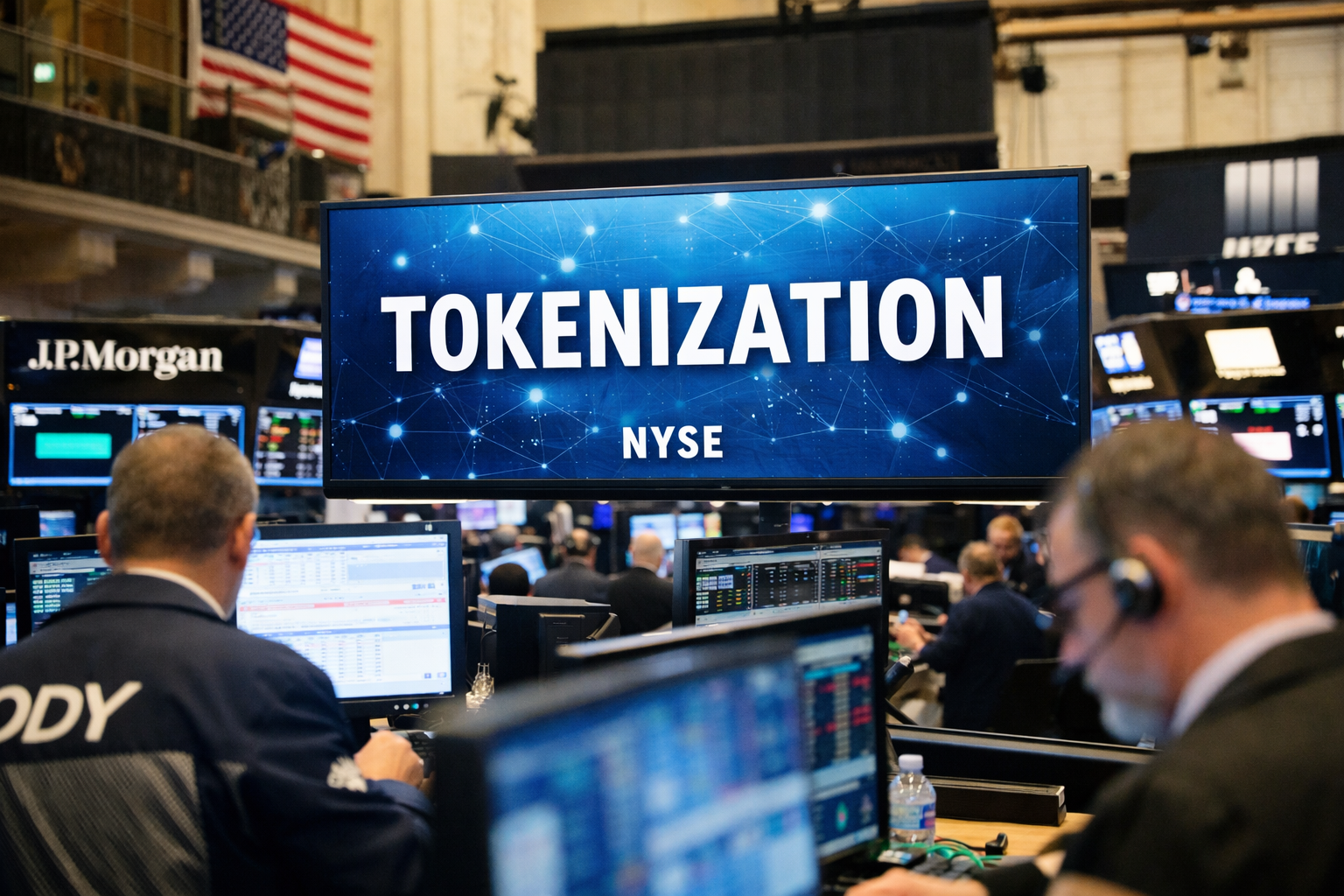
The tokenization of real-world assets is moving from theory to practice as large financial institutions and infrastructure providers expand experiments that place traditional assets on blockchain networks. In recent months, banks, asset managers, and market utilities have announced new pilots involving tokenized funds, treasuries, and private credit, signaling that tokenization is no longer confined to startups or proof-of-concept projects.
According to reporting by Reuters, firms such as BlackRock and Franklin Templeton have continued to develop tokenized investment products, while market infrastructure organizations like DTCC have explored blockchain-based settlement for traditional securities (https://www.reuters.com/technology/; https://www.dtcc.com).
What Happened
Several high-profile initiatives have drawn attention to tokenization as a potential evolution of financial market infrastructure. Asset managers have launched tokenized funds that represent ownership of traditional instruments on public or permissioned blockchains. At the same time, banks have tested tokenized deposits and settlement mechanisms designed to reduce friction in wholesale payments.
These efforts are taking place against a backdrop of higher interest rates and tighter liquidity, conditions that have increased focus on operational efficiency and settlement risk in financial markets.
Why Institutions Are Interested
Tokenization allows traditional assets—such as bonds, funds, or equities—to be represented as blockchain-based tokens. Proponents argue this can enable:
- Faster settlement
- Improved transparency
- Reduced operational costs
- More flexible market access
In a 2024 report, the Bank for International Settlements noted that tokenization could streamline post-trade processes but emphasized that benefits depend heavily on regulatory alignment and interoperability with existing systems (https://www.bis.org).
Market Impact So Far
Despite growing interest, tokenized asset markets remain relatively small compared to traditional markets. Most initiatives are limited in scope and often restricted to institutional participants. Public market impact has been muted, reflecting the early-stage nature of adoption.
However, the continued involvement of established financial institutions has lent credibility to the concept, distinguishing current efforts from earlier crypto-native tokenization experiments that struggled to gain traction.
Regulatory Considerations
Regulators have taken a cautious but engaged stance. Rather than opposing tokenization outright, authorities have focused on ensuring that existing investor protection, disclosure, and custody rules apply regardless of the technology used.
In public statements, regulators have emphasized that tokenization does not change the legal nature of an asset. A tokenized bond, for example, remains a bond subject to securities laws.
What Happens Next
Tokenization initiatives are likely to expand gradually, with institutions prioritizing controlled pilots over open-market launches. Broader adoption will depend on regulatory clarity, interoperability standards, and demonstrated cost savings.
For now, tokenization represents an incremental shift rather than a wholesale transformation—but one that major market participants appear increasingly willing to explore.
Sources & References
- Reuters technology and finance reporting on tokenized assets
- Bank for International Settlements research on tokenization
- DTCC publications on market infrastructure modernization
